NOTE:
NORWAY- NORMANDY
LEDGEN:
GENEALOGY
OF VIKINGS STARTS WITH ESTINE GULMRA.
Rognvald
Eysteinsson
(fl. 865)
sometimes referred to with the bynames of "the
Wise" or "the
The
First Ruler and Conqueror of Normandy Rollo (c. 846 ? c. 932), known as Ganger-Hr?lf (or
as G?ngu Hr?lfr in
the Old Norse language),[1][2][3]and baptised Robert,
was
THE KINSHIP RELATIONSHIP TO
ROLLO, VIKING COMES FROM TWO
ANCESTORS
DIRECT RELATIONSHIP TO ROLLO?S DAUGHTER
2nd
Ruler of Normandy: William I Longsword, Duke Guillaume
(French: Guillaume Longue-?p?e, Latin: Willermus
Longa Spata, Old Norse:Vilhj?lmr
Langaspj?t), (c. 893-17
December 942
) was the second ruler of Normandy, from 927 until his assassination.
RULER
OF A COUNTRY: crowned head, emperor, head of state, king,
VIKINGS KINDSHIP
Eystein
Glumra (the
Clatterer), also called Eystein
Ivarsson (born
ca. 805 in Nord-Tr?ndelag, Norway)
was Jarl (Earl)
of Oppland and Hedmark in Norway. According
to the Orkneyinga
Saga, Eystein the noisy was the son of Ivar the Uplanders?
earl, and grandson of Halfdan
the Old. Although
the Saga does mention a few Ivars, none are said to be Eystein's
father. Heiti, Gorr?s son, was father of Svei?i the
sea-king, the father of Halfdan the old, the father of Ivar the
Uplanders? earl, the father of Eystein the noisy, the father of
earl Rognvald the mighty and the wise in council.
He was born overseas to the Viking Rollo
while he was still a pagan.
srote de Bretagne (abt 0911)
Duke of Normandy Richard I (
the Duke of Normandy from 942 to 996. Son of William Longsword, His mother was a Breton concubine captured in war and bound to
Married to Gunnor DE CREPON (Abt 0936-1031)
Duke
of Normandy Richard II (
Fearless and Gunnora.[1][2] He was a Norman
nobleman of
Duke
of Normandy: Robert I the Magnificent (22 June 1000 ?
1?3 July 1035), was the
1027 until his
death. Owing to
uncertainty over the numbering of the Dukes of Normandy he is usually called
Robert I, but sometimes Robert II with
his ancestor Rollo as Robert I. He was
the father of William the Conqueror who became in 1066
King of England and founded the House of Normandy.
| GENEALOGY IN |
| King
Guillaume William I, The Conqueror, King of England 1024-1087
(VIKING) son of Duke of Normandy, Robert I, the Magniicent.Usually known
as William
the Conqueror and
sometimes William
the Bastard,[2][a] was
the first Norman King
of England,
reigning from 1066 until his death in 1087. The descendant of Viking raiders,
he had beenDuke
of Normandy since
1035. After a long struggle to establish his power, by 1060 his hold onNormandy was
secure, and he launched the Norman
conquest of England in
1066Matilda
Maud van Vlaanderen de Flanders Flemina-According to legend, when Duke William II of Normandy (later known as
William the Conqueror) sent his representative to ask for
Matilda's hand in marriage, she told the representative that she
was far too
high-born to consider marrying a bastard.
|
|
King Heney I Beauclerc of England (1068-1135) son of King William I Edith or Matilda daughter of Malcolm III King of Scots (Scotland) She is not the mother of Henry I. |
|
Princess Elizabeth Joan FitzRoy Beauclerc of England (1095-1166), Illegitimate daughter of King Henry I Beauclerc, her mother is unknown, but believed to be Siby S A L L O a van Montogomery Corbet. There is sufficient evidence Fergus did marry one of King Henry I daughters so Princess Elizabeth is just as good as any to establish a relationship connection to King Kenry I through her husband Fergus Galloway and the birth of their child Gilbert mac Fergus. Fergus Galloway, Lord of Galloway (1078-1161) Note (This line is entered in through Medric Troy Bells's Campbell ancestors) |

|
Empress Matilda (c. 7 February 1102 ? 10 September 1167), also known as the Empress Maude,[nb 1]was the claimant to the English throne during the civil war known as the Anarchy. The daughter of King Henry I of England and m. Edith/ Matilda of Scotland , she moved to Germany as a child when she married the future Holy Roman Emperor Henry V. She traveled with her husband into Italy in 1116, was controversially crowned in St. Peter's Basilica, and acted as the imperial regent in Italy. Matilda and Henry V had no children, and when he died in 1125, the crown was claimed by Lothair II, one of his political enemies. She then remarried.
|
|
King Henry II (5 March 1133 ? 6 July 1189), also known as Henry Curtmantle (French: Court-manteau),Henry FitzEmpress or Henry Plantagenet, ruled as Count of Anjou, Count of Maine, Duke of Normandy, Duke of Aquitaine, Count of Nantes, King of England (1154?89) and Lord of Ireland; at various times, he also controlled Wales, Scotland and Brittany. Henry was the son of Geoffrey of Anjouand Matilda, daughter of Henry I of England. |
|
King John of England (24 December 1166 ? 19 October 1216), also known as John Lackland (Norman French: Johan sanz Terre),[1] was King of England from 6 April 1199 until his death in 1216. |
|
King Henry III (1 October 1207 ? 16 November 1272), also known as Henry of Winchester, was King of England, Lord of Ireland and Duke of Aquitaine from 1216 until his death.[1] The son of King John andIsabella of Angoul?me, Henry assumed the throne when he was only nine in the middle of the First Barons' War |
|
Beatrice of England (24 June 1242[1] ? 24 March 1275), also known as Beatrice de Dreux, was a Princess of England as the daughter of King Henry III of England and Eleanor of Provence. Her siblings were Edward I of England, Margaret, Queen of Scotland, Edmund Crouchback, 1st Earl of Lancaster, Richard of England, John of England, Katherine of England, William of England, and Henry of England. She and her family were members of the Royal house of Plantagenet, which first ruled in the 12th century and was founded by Henry II of England. (Note: this line is entered into through Medric Troy Bell's Farmer ancestors) |
| GENEALOGY
IN |
|
| Fergus Galloway, Lord of Galloway (1078-1161) married Princess Elizabeth Joan FitzRoy Beauclerc of England The lords of Galloway consisted of a dynasty of heirs who were lords (or kings) and ladies who ruled over Galloway in southwest Scotland, mainly during the High Middle Ages. Many regions of Scotland, including Galloway and Moray, periodically had kings or subkings, similar to those in Ireland during theMiddle Ages. The Scottish monarch was seen as being similar to a high king (Ard-Righ in Gaelic). The lords of Galloway would have either paid tribute to the Scottish monarch, or at other times ignored him. The Lords of Galloway are fairly well recorded in the 12th and 13th centuries, but the records are incomplete or conflicting at other times. Later on, the kings were known as "lords" at the Scottish court, and "kings" at home, finally becoming "lords" in both arenas. Fergus of Galloway took the throne of Galloway some time between 1110 and 1120. When he died in 1161 Fergus left Galloway to his two sons,Uchtred and Gille Brigte (Gilbert). In 1174 Uchtred died after being brutally blinded and mutilated by his brother Gille Brigte and Gille Brigte's son, M?el Coluim (Malcolm) |
Lord of
Gallo |
|
Gilbert mac Fergus, Lord of Galloway (died 1185), also known as Gillebrigte, Gille Brighde, Gilbridge, Gilbride, etc., and most famously known in French sources as Gilbert, was Lord of Galloway of Scotland (from 1161 with Uchtred; 1174 alone, to 1185). Gilla Brigte was one of two sons of the great Fergus, the builder of the "Kingdom" of Galloway. Gille Brigte's reign is characterized by a large degree of hostility towards the Scottish kings. Unlike his brother Uchtred, he was no friend to incoming Normans. He maintained a Gaelic following. Such a policy made him popular in the province, but alienated him from his nominal Franco-Gaelicoverlords Aufrica of Fife ca 1040-unknown daughter of Duncan MaDuff, 4th Earl of Fife and NN ingen nn |

Earl of Fife |
|
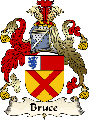
Duncan Donnchadh I Mac Gilvbert 1st Earl of Carrick DeGalloway Donnchadh (Latin: Duncanus; English: Duncan) was a Gall-Gaidhil prince and Scottish magnate in what is now south-western Scotland, whose career stretched from the last quarter of the 12th century until his death in 1250, He married the daughter of Alan fitz Walter, a leading member of the family later known as the House of Stewart?future monarchs of Scotland and England. Donnchadh was the first mormaer or earl of Carrick, a region he ruled for more than six decades, making him one of the longest serving magnates in medieval Scotland. His descendants include the Bruce and Stewart Kings of Scotland, and probably the Campbell Dukes of Argyll. Earl of Carrick or Mormaer of Carrick is the title applied to the ruler of Carrick (now southern Ayrshire), subsequently part of the Peerage of Scotland. The position came to be strongly associated with the Scottish crown when Robert the Bruce, who had inherited it from his maternal kin, became King of the Scots in the early 14th century. Since the 15th century the title of 'Earl of Carrick' has automatically been held by the heir to the throne, meaning Prince Charles is the current Earl. The earldom emerged in 1186, out of the old Lordship of Galloway Avelina daughter of Alan Fitz Walter High Stewart of Scotland and a crusader, The title of High Steward or Great Steward was given in the 12th century to Walter Fitzalan, whose descendants became the House of Stewart. In 1371, the last High Steward inherited the throne, and thereafter the title of High Steward of Scotland has been held as a subsidiary title to that of Baron of Renfrew & Duke of Rothesay, held by the heir-apparent. Thus, currently, The Prince of Wales is High Steward of Scotland, sometimes known as the Prince and Great Steward of Scotland. |

Earldom of Carrick
. Steward's arms |
|
Niall mac Dhonnchad, 2nd Earl of Carrick (1202-1256) N?all of Carrick (also Neil) was the second man to bear the title Mormaer, or Earl, of Carrick. He was successor of mormaer Donnchadh of Carrick. He may have been Donnchadh's son, or else as suggested by one recent genealogical theory, his grandson. It has been argued that Niall's father wasNichol (Cailean or Colin), son of mormaer Donnchadh by the daughter of Niall Ruadh, briefly king of Tir Eoghain.[1] N?all left no sons, and was succeeded by his daughter (Marjory The latter passed the mormaerdom on to her son Roibert a Briuis, who became King Robert I of Scotland. Margaret Stewart, Countess of Carrick (1216-1255) |
|
|
Marjorie, Countess of Carrick "Marthok nic Niall" (1253-1292) Countess of Carrick, Scotland, from 1256 to 1292, and is notable as the mother of Robert the Bruce. Her first husband was Adam of Kilconquhar, who died during the Eighth Crusade in 1271. Then, as the story goes, a handsome young man arrived one day to tell her of her husband's death in the Holy Land. He was Robert de Brus, 6th Lord of Annandale, and he had been a companion-in-arms of Adam of Kilconquhar. Marjorie was so taken with him that she had him held captive until he agreed to marry her at Turnberry Castle in 1271. He became Earl of Carrick jure uxoris(in right of his wife). |
|
|
KING Robert I Bruce "The Bruce" of Scotland (1274-1329) was King of Scots from 1306 until his death in 1329. Robert was one of the most famous warriors of his generation, and eventually led Scotland during the first of the Wars of Scottish Independence against England. He fought successfully during his reign to regain Scotland's place as an independent nation and is today remembered in Scotland as a national hero. Robert de Bruce Of Scoto-Norman heritage, through his father he was a third-great grandson of David I, as well as claiming Richard (Strongbow) de Clare, 2nd Earl of Pembroke, King of Leinster and Governor of Ireland, and William Marshal, 1st Earl of Pembroke, regent of England, in addition to Henry I of England amongst his ancestors. He was portrayed (as a leper) by Ian Bannen in the 1995 film Braveheart. Braveheart inaccurately portrays Robert de Brus as being involved in the capture of William Wallace in Edinburgh; Robert de Brus died in 1304 and William Wallace was captured on 3 August 1305 by SirJohn de Menteith in Glasgow. Bruce Isabella Van Mar Bruce of Scotland She was the daughter of Domhnall I, Earl of Mar and Helen (or Ellen) of Wales (1246?1295) |
|
|
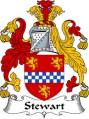
Marjorie Bruce or Marjorie de Brus (1296/7 ? 2 March 1316) was the eldest daughter of Robert the Bruce, King of Scots by his first wife, Isabella of Mar, and the founder of the Stewart dynasty. Her marriage to Walter, High Steward of Scotland gave rise to the House of Stewart. Her son was the first Stewart monarch, King Robert II of Scotland. |
|
|
King Robert II of Scotland (2 March 1316 ? 19 April 1390) reigned as King of Scots from 1371 to his death as the first monarch of the House of Stewart. He was the son of Walter Stewart, 6th High Steward of Scotland and of Marjorie Bruce, daughter of Robert the Bruce and of his first wife Isabella of Mar. NOTE: HE IS A GREAT ANCESTOR BY TWO OF HIS SONS 1. Robert Stewart III. King of Scotland 2. Robert Stewart, 1st Duke of Albany (through his daughter Marjorie (Marcellina) Stewart who married Duncan "Na-Adh" Campbell as his 1st wife and through his great grandaughter Margaret Stewart as his 2nd wife. Robert II has been depicted in historical novels. They include: |
|
| King Robert III of Scotland (14 August 1337 ? 4 April 1406), born John Stewart, was King of Scots from 1390 to his death. He was known primarily as the Earl of Carrick before ascending the throne at age 53. He was the eldest son of Robert II and Elizabeth Mure and was legitimated with the marriage of his parents in 1347 | |
|
Sir John Stewart (1362-1445) of Ardgowa and Blackhall, Knight. son of King Robert III--Natural son of King Robert III unknown wife |
 |
|
Margaret Marjory Stewart (1397-1460) daughter of Sir John Blackhall Stewart wife of Duncan "Na-Adh" Campbell, of Luchow, 1st Lord Campbell son of Son of Colin "Longantach" Campbell, of Lochow and Mariota Campbell, Lady Argyl daughter of John Campbell of Strachur British forces who fought against American in the Revolutionary War and Mary Lamont, daughter of Sir John Lamont and Maiorta MaGregor of Glenorchy NOTE: GENI also has a Majorie (Marcellia) Stewart married to Duncan "Na-Adh" Campbell of Luchow and has her as the daughter of Duke Robert Stewart, son of King Robert II-- |
 |


| GENEALOGY OF THE CAMPBELL CLAN OF SCOTLAND | |
|
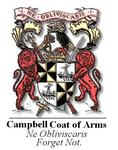
See https://en.wikipedia.org/wiki/Campbell_of_Auchinbreck for history of Campbells of Aurchinbreck: The Auchinbreck of Campbell family (also spelled Auchenbreck, Achnabreac, etc., from Scots Gaelic "Ach[adh] nam Breac" meaning either Field of the Trout or Speckled Field), was founded by Duncan Campbell of Kilmichael, in Glassary, Argyllshire, Scotland. He was the son of Duncan, first Lord Campbell of the Clan Campbell, by his second wife Margaret, daughter of Sir John Stewart of Blackhall, the illegitimate son of King Robert III of Scotland. The family of the Lords Campbell later became Dukes of Argyll, and remain chiefs of Clan Campbell. Duncan Campbell, as a grandson of King Robert III, received a considerable estate confirmed by royal charter dated 19 June 1452. The family remained at their estate of Auchinbreck, from which they took their title, until 1641. The Campbells of Auchinbreck were commissioned to provide military training and were used by the Earls of Argyll as military support. In 1628 the then head of the family of Campbells in Auchinbreck received a baronetcy, which included a grant of North American land in Nova Scotia. |
|
|
Dond ? Duibhne (c460-unk) |
|
|
Ferchar Uor ? Duibhne, lord of Lochow (530-UNK) |
|
|
Arthur ? Duibhne (620-UNK) |
|
|
Duibhne Dearg ? Duibhne, lord of Lochow (790-860) |
|
|
Duibhne Donn ? Duibhne, lord of Lochow (840-904) |
|
|
Duibhne Deab-GHeall ? Duibhne (945-UNK) |
|
|
Gillecholum ? Duibhne (995-1066) and Miss Beauchamp |
|
|
Archibald Campbell, 2nd Lord of Lochawe "Gillespic (Gillocallum) / Archibald", "Gilleasbaig" (1040-1091) |
|
|
Duncan MacDurine Campbell of Lochow, 3rd Lord of Lochow (1070-1165) |
|
|
Cailen Maol Marth 4th Campbell of Lochow "Sir Cailen" (1096-1110), There appears to be an error as he would have only been 14 at the time of his death and his son Archibald is born in 1090, 6 years before he was born. (Colin MacDuine of Lochow, (Colin Maol Maith-Good bald Colin) the head of the Clan MacDuine, (through a marriage connection the family became known as the Argyll Campbells and land owners in Argyllshire) enabled King Alexander the First, when disguised as a peasant, to escape from Dunstaffnage Fort during its siege in 1110 AD. Apparently killed during the siege of Dunstaffnage Fort. Dunstaffnage Castle was subsequently built on the site of the fort around 1220. Credit: Felicity Goodyear-Smith website)) and Eaill nic Eth |
|
|
Archibald Campbell of Lochawe "Gillespic Caimbeul of Lochawe" (1090-1162) |
|
|
Sir Duncan Campbell of Lochawe; Gillespic (Archibald) Campbell, of Lochow; (No Name) "Donnchadh Caimbeul of Lochawe" (1158-1200) |
|
|
Sir Dougal Campbell of Lochawe "Dubhghall Caimbeul of Lochawe" 1182-1204) |
|
|
Sir Archibald Campbell of Lochawe "Gillespic Caimbeul of Lochawe"v (1999-1280) (Gille Escoib or Gilleasbaig of Menstrie is the earliest member of the Campbell family to be attested in contemporary sources, appearing in royal charters dating to the 1260s. His existence is confirmed by later Campbell pedigrees. According to these genealogies, he was the son of a man named Dubhghall (?Dugald?). However, nothing is known of this man, nor of the 4 or 5 generations of his ancestors who constitute the probable historical section these genealogies preceding Dubhghall. The name Gilleasbaig is a modernization of ?Gilla Escoib? (with a variety of related spellings, such as Gille Escoib), and is often rendered as ?Archibald? in English or occasionally ?Gillespie? or Giilespic. Gilleasbaig?s first historical appearance dates to 1263, when he appeared in a charter of King Alexander III of Scotland, being named as ?Gilascoppe Cambell?. He was granted the estates of Menstrie and Sauchie in Clackmannanshire (but then under the supervision of the sheriff of Stirling). In 1266 he witnessed another royal charter at Stirling granting favours to Lindores Abbey. Credit: Felicity Goodyear-Smith website)) Erricka (Elesick) of Carrick, or Married to Afraig, a daughter of Cailean mac Donnchaidh, the brother of Niall, Earl of Carrick. Son Cailean M?r: Felicity Goodyear-Smith website)) |
|
|
Sir Colin Mor Campbell, Chief of Clan Campbell "Colin "the Great" Campbell" (1230-1294) (Cailean?s mother was Afraig, a daughter of Cailean mac Donnchaidh, the brother of Niall, Earl of Carrick. This means that Cailean himself was the cousin of the future king, Robert I of Scotland, which explains why the Campbells were so attached to the Bruce cause during the Wars of Scottish Independence. Cailean himself took part in the Great Cause, and was one of the Bruce representative advocates to King Edward I of England in 1291. The Duke of Argyll is also the chief of the Scottish clan of Campbell and in this capacity is known as ?MacCailean Mor?, which is Gaelic, for ?Son of Colin the Great? referring to Cailean M?r of Lochawe (Colin of Lochow) who was killed in fighting with the Lord of Lorne in 1296. He was knighted in 1280. Cailean M?r (fully, Cailean M?r Caimbeul) or Sir Colin Campbell is one of the earliest attested members of Clan Campbell and an important ancestor figure of the later medieval Earls of Argyll. Cailean?s great fame lies in the fact that the later Earls and Dukes of Argyll claimed descent from him, and styled themselves ?Mac Cailein M?r?, son or descendant of ?Colin the Great?. Sir Colin Campbell of Lochow, sixth in descent from the first Gillespie, distinguished himself by his warlike actions, and was knighted by King Alexander the Third in 1280. He added largely to his estates, and on account of his great prowess he obtained the surname of Mohr or More (?great?); from him the chief of the Argyll family is in Gaelic styled Mac Chaillan More. Sir Colin Campbell had a quarrel with a powerful neighbour of his, the Lord of Lorn, and after he had defeated him, pursuing the victory too eagerly, was slain (in 1294) at a place called the string of Cowal, where a great obelisk was erected over his grave. This is said to have occasioned bitter feuds betwixt the houses of Lochow and Lorn for a long period of years, which were put to an end to by the marriage of the daughter of the Celtic proprietor of Lorn, with John Stewart of Innermeath about 1386. Credit: Felicity Goodyear-Smith website)) |
|
|
Sir Neil Campbell of Lochow Maccailen More", "Sir Neil /Campbell/", "10th Knight of Lochow", (1258-1315/6) (Niall mac Cailein, also known as Sir Neil Campbell, was a nobleman and warrior who spent his life in the service of King Robert I of Scotland, His Gaelic name means ?Niall, Colin?s son? since he was the son of Cailean M?r. His services to the King elevated the Campbells into the higher ranks of the Scottish nobility. He was invested as a Knight circa 1289. In 1296 he joined Robert the Bruce in the struggle against the English. Robert the Bruce granted him, his wife Lady Mary Bruce and their son John, all of the lands of David de Strathbogie, 11th Earl of Atholl. He lived in Lochow, Argyllshire, Scotland. On 26 April 1315 he was one of the great Barons of Parliament which met to fix the succession to the Crown. Credit: Felicity Goodyear-Smith website)) |
|
|
Sir Colin Campbell Lord of /Lochow/"Lord of Loch Awe", "11th Knight of Lochowe", (1280-1340/1382) Son of Sir Neil Campbell of Lochow and Mariota Margaret Campbell (Cameron) (Received a charter from Robert the Bruce, his uncle dated Arbroath, 1316, He obtained a charter from his uncle, King Robert Bruce, of the lands of Lochow and Artornish, dated at Arbroath, 10th February 1316, in which he is designated Colinus filius Cambel, militis. He accompanied the expedition of King Robert I to Ireland in 1316 to win its throne for the King?s brother, Edward Bruce, and in 1334 assisted Robert, 7th High Steward of Scotland, to recover the Castle of Dunoon from the English, following which he was appointed its heritable Keeper in 1334. Had the grant of certain lands for the support of his dignity. Credit: Felicity Goodyear-Smith website) |
|
|
Archibald More Campbell of Lochow (1310-1372/1392) Son of Sir Colin Campbell and Helena Campbell, of Lennox Isabella Mary Campbell |
|
|
Colin
"Longantach" Campbell, of Lochow (c1344-1414)
Son of Archibald
More Campbell of Lochow and Isabella
Mary Campbell
Sir Colin Campbell of Lochow gained the title of Lord of Lochow (feudal barony). He held the office of Lieutenant and Commissary of Argyll in 1382. He lived in Lochow, Argyllshire, Scotland. |
|
|
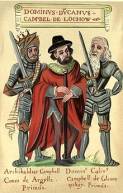
Duncan "Na-Adh" Campbell, of Luchow, 1st Lord Campbell son of Son of Colin "Longantach" Campbell, of Lochow M. Margaret Marjory Stewart, daughter of Sir John Blackhall Stewart. He was also married to Marjory Campbell; and Marjorie (Marcellina) Stewart (SEE GENEA;LOGY OF MARGARET STEWART) THE IMAGE TO THE RIGHT: A 16th or 17th century illustration from The Black Book of Taymouth shows Duncan flanked by two of his descendants. On Duncan?s right stands his grandson Colin Campbell, 1st Earl of Argyll, here wrongly called Archibald, and on his left is his son Colin of Glenorchy. (Description after Boardman, The Campbells. Credit: Felicity Goodyear-Smith website |
 |
|
Sir Duncan Campbell (1431- 1462) of Kilmichael, 1st Lord of Auchinbreck Son of Duncan "Na-Adh" Campbell, of Luchow, 1st Lord Campbell and Margaret Stewart, of Blackhall & Ardgowan Anna McCowle (1440 - 1462) on January 29, 1457. Others having him marrying Anna MacDougall, but the dates doesn't fit. |
|
|
Sir Dugald, 2nd Lord of Auchinbreck Campbell (1457-1497) son of Sir Duncan Cambell Agnes Baroness Auchinbreck Lamont (1463-1486) daughter of Sir John Lamont of Inverrevne. |
|
|
Gillespic (Archibald) Auchinbreck Campbell (1480-1542) son of Sir Dugald 2nd Lord of Auchinbreck Campbell m. Margaret Campbell (1476-1514), daughter of Colin Campbelll, 3rd Arkdngass and Marion Houston |
|
|
Sir Duncan Auchenbreck Campbell (1491-1594) son of Archinbald Auchinbreck Campbell m. Ann Buchanan (1511-1555) |
|
|
Duncan Campbell, 4th Lord of Auchenbrech w1540-1594) as the son of Duncan Auchenbrech Campbell (1491-1594). Possibly killed with his father. Mary Macleod, daughter of William Macleod of Dunvegan in Skye, |
|
|
Sir Dugald Campbell of Auchinbrech, 1st Baronet, was born c. 1570 (1576-1641), son of Duncan Campbell and Mary Macleod. Mary Erskine daughter of Hon. Sir Alexander Ersking of Gogar and Margaret Homes. |
|
|
Sir Duncan Campbell, 2nd Baronet of Auchinbreck (1597-1645) was the son 0f Sir Dugal Campbell 1st Bt. Jean Colquhoun, daughter of Sir Alexander Colquhoun of Luss |
|
|
Sir Archibald Campbell of Knockemellie (1610-1675) Margaret Campbell, daughter of Sir Colin Campbell of Ardesier, Tutor of Cawdor and Elizabeth Brodie |
|
|
Sir Duncan Campbell of Auchinbreck, 4th Baronet (1638-1700) He married Lady Henrietta Lindsay, daughter of Alexander Lindsay, 1st Earl of Balcarres and Lady Anne Mackenzie |
|
|
Sir Dugald Campbell, 1st Baronet and 5th Lord of Auchinbreck (1576-1641) son of Sir Duncan Campbell, 4th Lord of Auchinbreck m. Mary Erskin (1575-1614) |
|
|
Duncan (Sir) Campbell of Auchinbreckj, 2nd Baronet (1583-1645) son of Sir Dugald Campbell, 1st Baronet and 5th Lord of Auchinbrech m. Jean Baroness Chatcart Colguhound (1607-1631) dau of Alexander Alasdair Colquhoun Clan of Colquhoun |
clan of Colquhoun |
|
Sir Captain Archinbald Knockmeill Lord of Western Kamis Campbell (1625-1662), son of Sir Duncan Campbll of Auchinbreck, 2nd Baronet m. Margaret Campbell (1630-1680) dau of Colin Campbell, tutor (guardian) of Calder |
|
|
Sir Duncan Campbell, 4th Baronet Auchinbreck (1638-1700) son of Sir Captain Archinbald Knockmell Lord of Wester Kamis Campbell Lady Henrietta Lindsey (1638-1699) dau of Alexander, First Earl of Balcarres, by his wife, Lady Anne Mackenzie, See http://www.electricscotland.com/history/ladies/ladies22.pdf Ladies of the Covenant HENRIETTA LINDSAY, Lady Campbell, of Auchinbreck* Also see History of the Lindsay family at http://www.clanlindsay.org.au/lindsay.htm |
Lindsay |
| James Sir Campbell, 5th Baronet of Auchinbreck
(1658-1756)
son of Sir Duncan, 4th Baronet Auchinbreck. See http://www.historyofparliamentonline.org/volume/1690-1715/member/campbell-sir-james-1679-1756
Lady Susan Elizabeth Cawdor (1658-1690) dau of Sir Archibald Campbell of Calder (See Clan Campbellof Cawdor at https://en.wikipedia.org/wiki/Clan_Campbell_of_Cawdor |
|
|
CAMPBELL IN AMERICA See Scots and Scots Descendant in America http://www.electricscotland.com/history/descendants/chap1.htm |
|
|
Gilbert Campbell (1682-1750) son of James Campbell, 5th Baronet of Auchinbreck, see post http://archiver.rootsweb.ancestry.com/th/read/CAMPBELL/2002-09/1032479953 Prudence Osran (1699-1750) |
|
| George
Washington Campbell (1740-abt 1777) son of Gilbert
Campbell (There area apparently2 George Washngton Campbells during the
time of the Revolutionary War..the dates of birth are different and it
appears the other George Washington Cambpell served during the War. Will
Extract of Gilbert Campbell Augusta Co., VA [[Page 294.--29th August, 1750. Gilbert Campbell's will, of Forks of James River, plantationer--Wife, Prudence Campbell, alias Osran; son, George (infant);Agenes McClure (1746-1795) |
|
|
Mary Polly Campbell (1769-1850) dau of George Washington Campbell George Washington Vineyard (1750-1808) |
|
|
Mary Vineyard (1799-1881) dau of Mary Pollly Campbell John Bell (1789-1842) |
|
|
Campbell "Cam" Bell (1839-1921) son of Mary Vinyard and John Bell Isabell Barns (1860-1925) |
|
|
Charles Campbell Bell (1889-1964) son of Campbell "Cam" Bell and Isabell Barns, he is burried in Enola Arkansas, Falkner Co. his father is also burried in the same cemetary. Atlanta Beatrice Keathley (1889-1925) |
|
|
Medric Troy Bell (1918-1995) daughter of Charles Campbell Bell, buried in Woodville, Texas Jessie Luther Noe (1914-1996) buried in Kerman, California with his brother Chester, his mother Laura, and one sister Ruby |
|



|
Robert Stewart, Duke of Albany (c. 1340 ? 3 September 1420), an illegitimate son of the future King Robert II of Scotland and ofElizabeth Mure of Rowallan. He was legitimated in 1349 by his parents' marriage. Robert's grandfather was Walter Stewart, 6th High Steward of Scotland (1293?1326) and his father was the first monarch of the House of Stewart. His great-grandfather was Robert the Bruce (1274?1329), legendary victor of theBattle of Bannockburn. He was a member of the Scottish royal house, served as regent (at least partially) to three different Scottish monarchs (Robert II, Robert III, and James I). He also held the titles of Earl of Menteith (28 February 1361), Earl of Fife (1361; resigned in 1372), Earl of Buchan (1394; resigned in 1406) and Earl of Atholl (1403, for the duration of Robert III's life only), in addition to his 1398 creation as Duke of Albany. A ruthless politician, Albany was widely regarded as having caused the murder of his nephew, the Duke of Rothesay, and brother to the future King James I of Scotland. James was held in captivity in England for eighteen years, during which time Albany served as regent in Scotland, king in all but name. He died in 1420 and was succeeded by his son, Murdoch Stewart, Duke of Albany, who would be executed for treason when James returned to Scotland in 1425, almost causing the complete ruin of the Albany Stewarts. |
Robert Steward |
| Gillespic (Archibald) Campbell, Master of Campbell Son of Duncan "Na-Adh" Campbell, of Luchow, 1st Lord Campbell and Marjorie (Marcellina) Stewart she was the daughter of Robert Steward 1st Duke of Albany who was the son of King Robert Steward II and a brother of Sir Duncan Campbell (1431- 1462) of Kilmichael, 1st Lord of AuchinbreckElizabeth Somerville |
Marjorie (Marcellina) Steward, 1st wife of Duncan "Na-Adh" Campbell, |
|
Colin Campbell, 1st Earl of Argyll (c. 1433 ? 10 May 1493) was a Scottish nobleman He was the son of Gillespic (Archibald) Campbell, Master of Campbell and Elizabeth Somerville. Colin Campbell succeeded his grandfather Duncan Campbell, 1st Lord Campbell in 1453, and was created Earl of Argyll in 1457 and Lord Lorne in 1470, after the resignation of his wife's uncle Walter Stewart, 3rd Lord Lorne, who became Lord Innermeath.Campbell had supported King James II against the "Black Douglases", led by the 8th Earl of Douglas, and was given the earldom by King James III. James also gave him the position of Lord Chancellor of Scotland, but he eventually collaborated in the slaying of James III in 1484. In 1488 he became Lord Chancellor again, this time given by James IV of Scotland. He is buried at Kilmun Parish Church. |
|
| Gillespie Archibald Campbell, 2nd Earl of Argyll (died 9 September 1513) was a Scottish nobleman and politician who was killed at the Battle of Flodden Archibald was the eldest son of Colin Campbell, 1st Earl of Argyll and Isabel Stewart, daughter of John Stewart, 2nd Lord Lorne.[1] He was made Master of the Royal Household of James IV of Scotland on 24 March 1495.[2] After a crisis of law and order in the west of Scotland, Argyll was made governor of Tarbert Castle and Baillie of Knapdale, and this was followed by an appointment as Royal Lieutenant in the former Lordship of the Isles on 22 April 1500.[3] Argyll eventually rose to the position of Lord High Chancellor of Scotland. His "clan" was rivalled only by Clan Gordon.The Earls of Argyll were hereditary Sheriffs of Lorne and Argyll. However, a draft record of the 1504 Parliament of Scotland records a move to request Argyll to hold his Sherriff Court at Perth, where the King and his council could more easily oversee proceedings, if the Earl was found at fault. The historian Norman Macdougall suggests this clause may have been provoked by Argyll's kinship with Torquil MacLeod and MacLean of Duart.[4] These western chiefs supported the suppressed Lordship of the Isles. The Earl of Argyll was killed at the Battle of Flodden on 9 September 1513, with the king and many others. He is buried at Kilmun Parish Church. | |
|
Sir John Campbell (c. 1490 - 1 May 1546) ancestor of the Earls of Cawdor was a Scottish nobleman and the eponymous ancestor of the Campbells of Cawdor.John was the third son of the Archibald Campbell, 2nd Earl of Argyll and Elizabeth, a daughter of John Stewart, 1st Earl of Lennox. He married the daughter and heiress of Sir John Calder of Calder, in 1510, whom his father had kidnapped. He died on 1 May 1546, his wife Muriel surviving him dying in 1575. In 1510, Muriel Calder, daughter of John
Calder, 7th Thane of Calder, married Sir
John Campbell, third son of the 2nd Earl of Argyll. From 1524
to 1546, Sir John Campbell of Calder lived at Calder (now Cawdor)
Castle, until his death. After Muriel's death in 1573, the Thanedom was
resigned in favour of her grandson, John Campbell. In the 17th century,
Sir John Campbell of Calder sold Croy and disposed of Ferintosh to Lord
Lovat, in order to buy the Isle of Islay. Islaywas
held by the Campbells of Calder from 1612-1726 when it was bought by
Daniel Campbell of Shawfield. Sir John Campbell, 8th of
Calder, married Mary, eldest daughter of Lewis Pryce (or
Pryse) of Gogerddan in Cardiganshire.
Campbell of Cawdor died in 1777 and was succeeded by his son,Pryse
Campbell of
Calder, who was a MP for Cromartyshire and Nairnshire. His son, John, was made Lord Calder of Castlemartin in
1797. On his death in 1821, he was succeeded by his son, John Fredrick Campbell, 1st Earl of Cawdor.[1] From the 1st Earl of Cawdor descend the Earls
of Cawdor. (Source: records of the Scottish Privy Council,
1613?1616) The name "Cawdor" is the English pronunciation and spelling of the ancient and original Highland name of CALDER. In the early 19th century, Lord John Campbell of Calder was residing in England and changed the name of the castle, town and clan overnight so that it would match the Shakespearean designation (reference: Cawdor Historical Society).
|
|
|
Archibald Campbell 2nd of Cawor abt 1510 Isabella Grant abt 1520 |
|
| John Campbell was born Abt. 1540, and died 1592.He married Mary Keith. | |
| Sir John Campbell (son of John Campbell and Mary Keith) was born 1576, and died 1642.He married Jean (Jane) Campbell. | |
| Sir Colin Campbell (son of Sir John Campbell and Jean (Jane) Campbell) was born Abt. 1607, and died 1642.He married Elizabeth Brodie. | |
| Hugh Campbell (son of Sir Colin Campbell and Elizabeth Brodie) was born Abt. 1625 in Scotland, and died Bet. 1715 - 1716.He married Henrietta Stewart, daughter of James Stewart and Margaret Home. | |
| Archibald or Alexander Campbell of Cawdor (son of Hugh Campbell and Henrietta Stewart) was born Abt. 1640 in Scotland, and died date unknown.He married Elizabeth Lort, daughter of John Lort and Susan Holles. | |
| Lady Susan Elizabeth Cawdor (daughter of Archibald or Alexander Campbell of Cawdor and Elizabeth Lort) was born 1668 in Scotland, and died date unknown.She married Sir James Campbell, son of Sir Duncan Campbelland Harriet Lindsey. |

GENEALOGY OF MITILDA MAUD VLAANDEREN OF
|
Queen
Matilda of of Flanders. Queen of
England daughter
of Adele of France, granddaughter of King Robert II, wife of King William I of England
|
|
mother
Ade
Robert II and Constance of
Aries. sister of King Hugh Magnus of France and King Henry I of
Baldwin V. Count of Flanders died 1067 |
|
gf
King
Robert II of
Arles, the daughter of William I of
|
g.gf
King Hugh
Capet 941-966,
1st King of the Franks Co-King Through his mother, Hugh was the nephew to Otto I, HolyRoman Emperor, Henry I duke of Bavaria Burno the Great, Archbishop Cologne, and finally, Gerberga of Saxony Queen of France; Gerberga was the wife of Louis IV, King of France and mother of Lothair of France and Charles, Duke of Lower Lorraine
Adelaide
of |
2g.gf
Hugh the
Great 898-16 Jun 956 Duke of the Franks and Count of
but refused.
Hedwig
of Saxony, daughter of KING Henry the Fowler of
|
|
3g.gf
King
Robert I of West Francia 866-923 King of
and brother to King Odo of
Beatrice of Vermandois, daughter of Herbert I
of Vermandois (See
|
4g.gf
Robert
the Strong (c. 830-2 Jul 866) Father of 2 Kings (Robert I and
Odo or Eudes)
of Hugh of Tours and his wife Bava
|
|
Robert III of Worms, Robert III (800?834), also called Rutpert, was the Count of Worms and Rheingau of a noble Frankishfamily called the Robertians. He was the son of Robert of Hesbaye. Waldrada d'Orleans |
| Robert of Hesbaye, Robert II, also spelt Rodbert and Chrodobert (died about 807) was a Frankish nobleman who was count of Worms and of Rheingau and duke of Hesbaye around the year 800. He is the earliest known male-line ancestor of the French royal family called the Capetians (including the Valois and the Bourbons), and of other royal families which ruled in Portugal, Spain, and the Kingdom of the Two Sicilies. |
| Robert I, was probably the son of Thuringbert of Worms and Rheingau and thus a grandson of Robert I, Duke of Neustria (c. 697?764). |
 see Hedwig of Saxony's King ancestors below
| King Robert the Brus, 7th Lord of Annandale |
|
Robert de Brus, 6th Load of Annandale (July 1243 ? soon bef. 4 March 1304[1]), 6th Lord of Annandale (dominus vallis Anandie), jure uxoris Earl of Carrick[2] (1271?1292), Lord of Hartness,[3] Writtle and Hatfield Broad Oak(Wretele et Hatfeud Regis), was a cross-border lord,[4] and participant of the Second Barons' War, Ninth Crusade, Welsh Wars, and First War of Scottish Independence. Of Scoto-Norman heritage, through his father he was a third-great grandson of David I, as well as claiming Richard (Strongbow) de Clare, 2nd Earl of Pembroke, King of Leinster and Governor of Ireland, and William Marshal, 1st Earl of Pembroke, regent of England, in addition to Henry I of England amongst his ancestors. |
|
Robert de Brus, 5th Lord of Annandale(ca. 1210 ? 31 March or 3 May 1295[1]), was a feudal lord, Justice and Constable of Scotland and England, a Regent of Scotland, and acompetitor for the Scottish throne in 1290/92 in the Great Cause. His grandson Robert the Bruceeventually became King of Scots. |
|
Isobel of Huntingdon (1199?1251), also known as Isobel the Scot, was the daughter of David of Scotland, 8th Earl of Huntingdon, grandson of David I of Scotland, and Matilda of Chester. She married Robert Bruce, 4th Lord of Annandale and through her came the claims firstly of her son in 1290 and later in the beginning of 14th century of her great-grandson Robert Bruce, 7th Lord of Annandale, to the Scottish throne. |
| David of Scotland (Medieval Gaelic: Dab?d) (c. 1144 ? 17 June 1219) was a Scottish prince and 8thEarl of Huntingdon. He was, until 1198, heir to the Scottish throne. |
| Henry of Scotland (Eanric mac Dab?d, 1114 ? 12 June 1152) was a prince of Scotland, heir to the Kingdom of Alba. He was also the 3rd Earl of Northumberland and the 3rd Earl of the Honour of Huntingdon and Northampton. He was the son of King David I of Scotland and Queen Maud, 2nd Countess of Huntingdon. His maternal grandparents were Waltheof, Earl of Northumbria and Huntingdon, (beheaded 1076) and his spouse Judith of Lens. Henry was named after his uncle, King Henry I of England, who had married his paternal aunt Edith of Scotland (the name Edith gallicised as Matilda after becoming Queen consort in 1100) |
| KING David I of Scotland David I or Dau?d mac Ma?l Choluim (Modern: Daibhidh I mac [Mhaoil] Chaluim;[1] 1083 x 1085 ? 24 May 1153) was a 12th-century ruler who was Prince of the Cumbrians (1113?1124) and later King of the Scots (1124?1153). The youngest son of M?el Coluim III (Malcolm III) and Margaret of Wessex, David spent most of his childhood in Scotland, but was exiled to England temporarily in 1093. Perhaps after 1100, he became a dependent at the court of King Henry I. There he was influenced by the Norman and Anglo-French culture of the court. He was probably the eighth son of King M?el Coluim mac Donnchada, and certainly the sixth and youngest produced by M?el Coluim's second marriage to Queen Margaret. He was the grandson of the ill fated King Duncan I.[3] After the death of his former patron Henry I, David supported the claims of Henry's daughter and his own niece, the former Empress-consort,Matilda, to the |
| KING Malcolm III of Scotland (Gaelic: M?el Coluim; c. 1031 - 13 November 1093) was King of Scots from 1058 to 1093. He was later nicknamed Canmore (ceann m?r) in Scottish Gaelic, "Great Chief". (Ceann = leader, "head" [of state]. M?r = pre-eminent, great, "big".) [1][2] Malcolm's long reign, lasting 35 years, preceded the beginning of the Scoto-Norman age. He is the historical equivalent of the character of the same name in Shakespeare's Macbeth. His daughter Edith/Matilda married King Henry I of England. Saint Margaret |
| KING Duncan I of Scotland Donnchad mac Crinain (Modern Gaelic: Donnchadh mac Cr?onain;[2] anglicised as Duncan I, and nicknamed An t-Ilgarach, "the Diseased" or "the Sick";[3] ca. 1001 ? 14 August 1040)[1] was king ofScotland (Alba) from 1034 to 1040. He is the historical basis of the "King Duncan" in Shakespeare's playMacbeth. |
| Cr?n?n
of Dunkeld
(died 1045) was the
lay
abbot
of the monastery of Dunkeld,
and perhaps the Mormaer
of Atholl.
Cr?n?n was progenitor of theHouse
of Dunkeld,
the dynasty which would rule Scotland until the later 13th
century. He was the son-in-law of one king, and the father of
another. Crin?n was married to
Beth?c,
daughter of M?el
Coluim mac Cin?eda (Malcolm
II) (King
of Scots, who reigned from 1005 to 1034)
Bethoc |
GENEALOGY PRINCESS BETHOC, DAUGHTER OF KING MALCOLM II OF SCOTS, WIFE OF KING CRINAN OF DUNKELD Kings through Princess Bethoc, Wife of King Crinan of Dunkeld and was the elder daughter of King Malcolm II of Scotlan. Her father through her 3rd g grandfathers were Kings |
|||
|
2g.grandfather CONSTINE I OF THE PICTS Causant?n or Constant?n mac Cin?eda (in Modern Gaelic, C?iseam mac Choinnich; died 877) was aking of the Picts. He is often known as Constantine I in reference to his place in modern lists of kings of Scots, but contemporary sources described Causant?n only as a Pictish king. A son of Cin?ed mac Ailp?n ("Kenneth MacAlpin"), he succeeded
his uncle
Domnall mac Ailp?n
as Pictish king following the latter's death on reign witnessed increased activity by Vikings, based in Ireland, Northumbria and northern Britain. He died fighting one such invasion. |
|||
3g.grandcather KING KENNETH MACALPIN Cin?ed mac Ailp?n (Modern Gaelic: Coinneach mac Ailpein),[1] commonly
anglicised
as Kenneth MacAlpin and known
in most modern regnal lists as
Kenneth I (810
? of the Picts who, according to national myth, was the first king of Scots. He was thus later known by the posthumous nickname of An Ferbasach, "The Conqueror".[2] The dynasty that ruled Scotland for much of the medieval period claimed
|
| GENEALOGY
OF HEDWIG OF
|
|
GENEALOGY OF BEATRICE OF VERMANDOIS, WIFE OF KING ROBERT I, DAUGHTER OF HERBERT 1 OF VERMANDOIS
Queen Beatrice De Vermandois
|
|
B?atrice
of Vermandois, (c880-931) daughter of Herbert I wife of King Robert I |
|
f. Herbert
I, Count of Vermandois, (c. 848/850-907) son of Pepinn Count of Vermandois
son of Pepin Married Bertha de Morvis |
|
gf. Pepin,
Count of Vermandois (818-after
854) , son of Bernard
Unknown |
|
g-gf
KING Bernard
of Italy, King of the Lombards ,
son of Pepin
Married Cuegonde |
|
2g-gf KING Pepin Carolman of Italy,
King of the Rothais?
|
3g-gf KING
CHARLEMAGNE, Crowned King
of Franks in 768; became King of Italy from 744; and in 800 he
became the first
Holy Roman Emperor., He is numbered as Charles
I in the regnal lists of
Today his is not only regarded as the founding
father of both French and German monarchies, but as the
father of
Married Hildegard of Vinzgouw |
|
4g-gf KING
Pepin III (the short) of the Franks son
of Charles Martel served with his brother King Carolman as Co
King.
Bertha Broadfood of Laon, Queen of the Franks Charibert, Count of Laon and
Gisela |
|
5g-gf De
facto ruler (King) Charles Martel (c. 688 or 686, 680 - 741) Duke and
Price of the Franks, De Facto ruler
of Francia from 718 until his death. |
|
6g-gf
De facto Ruler (King) Pepin of Herstal or Pepin II (c. 635-714) De
facto ruler of Francia. He took the
title, Duke and Prince of the Franks, upon his conquest
of all the Frankish realm .
Married a noblewoman named Alpaida |
|
7g-gf
Ansegisel (c. 602 0r
610 - murdered before 679 or 662), he served King Sigbert II of
married Doda |
8g-gf
ARNULF
OF METZ, Saint, (c 582-640) was a frankish bishop of
as bishop and became a monk |
| Family line of Medric Troy Bell through the
Farmes to Princess Beatrice and Jean II, Count of
Brittany. Her English line is already covered elsewhere.
Princess
Beatrice of England
(24 June 1242[1]
? 24 March 1275), also known as
Beatrice
de Dreux,
was a Princess of England as the daughter of King
Henry
III of England
and Eleanor
of Provence.
Her siblings were Edward
I of England,
Margaret,
Queen of Scotland,
Edmund
Crouchback, 1st Earl of Lancaster,
Richard of England, John of England, Katherine of England,
William of England, and Henry of England. She and her family
were members of the Royal house of
Plantagenet,
which first ruled in the 12th century and was founded by
Henry
II of England.
m.
Jean II (The Red) count of Brittany
Through her father's line Henry II of England and Eleanor of Aquitaine Geoffrey of Anjouand and Holy Roman Empress, German Queen, and Queen of France Matilda Henry I of England. and Edith/ Matilda of Scotland |
| Thru her mother's line through Princess Beatrice (de Druex) of England, daughter of King Henry III of England and Eleanor of Provance |
| m. Eleanor of Provence (c. 1223 ? 24/25 June 1291[1]) was Queen consort of England, as the spouse of King Henry III of England, from 1236 until his death in 1272. Dau of Ramon Berenguer IV, Count of Provence(1198?1245) and Beatrice of Savoy (1205?1267) Although she was completely devoted to her husband, and staunchly defended him against the rebelSimon de Montfort, 6th Earl of Leicester, she was very much hated by the Londoners. This was because she had brought a large number of relatives with her to England in her retinue; these were known as "the Savoyards", and they were given influential positions in the government and realm. On one occasion, Eleanor's barge was attacked by angry citizens who pelted her with stones, mud, pieces of paving, rotten eggs and vegetables. Eleanor was the mother of five children including the future King Edward I of England. She also was renowned for her cleverness, skill at writing poetry, and as a leader of fashion. (NOTE: The Berenguers were Counts of Provance for a number of generations. |
| gf Ramon Berenguer IV or V (1198 ? 19 August 1245), Count of Provence and Forcalquier, was the son of Alfonso II of Provence and Garsenda de Sabran, heiress of Forcalquier. |
|
g-gf King Alfonso II of Aragon (1?25 March 1157[1][2][3] ? 25 April 1196), called the Chaste or the Troubadour, was theKing of Aragon and, as Alfons I, the Count of Barcelona from 1164 until his death.[1][4] He was the son of the count Ramon Berenguer IV of Barcelona and the Queen Petronilla of Aragon and the first King of Aragon who was also Count of Barcelona. He was also Count of Provence from 1166 or shortly before,[5]which he acquired from Countess Douce II, until 1173, when he ceded it to his brother Berenguer m. Sancha of Castile (+) See her ancestors below |
| 2g-gm Queen Petronilla of Aragon (29 June[1]/11 August[2] 1136 ? 15 October 1173), whose name is also spelled Petronila orPetronella (Aragonese Peyronela or Payronella,[3] and Catalan: Peronella), was the Queen of Aragonfrom the abdication of her father in 1137 until her own abdication in 1164. She was the daughter and successor of Ramiro II by his queen, Agnes. She was the last ruling member of the Jim?nez dynasty in Aragon, and by marriage brought the throne to the House of Barcelona. |
| 3g-gf King Ramiro II of Aragon (24 April 1086 ? 16 August 1157), called the Monk, was King of Aragon from 1134 until withdrawing from public life in 1137 (although he used the royal title until his death). He was the youngest son of Sancho Ram?rez, King of Aragon and Navarre and Felicia of Roucy. |
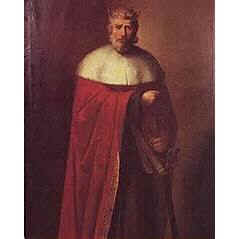
| 4g-gf King Sancho Ram?rez (c. 1042 ? 4 June 1094) was King of Aragon (1063?1094, not formally until 1076) andKing of Navarre (from 1076, as Sancho V). He was the son of Ramiro I of Aragon and Ermesinda of Bigorre, and he succeeded his father in 1063.[1] |
| 5g-gf King Ramiro I of Aragon (bef. 1007 ? 8 May 1063) was the first King of Aragon from 1035 until his death. Apparently born before 1007, he was the illegitimate son ofSancho III of Navarre by his mistress Sancha de Aybar.[1] Ramiro was reputed to have been adopted by his father's wife Mayor after he was the only of his father's children to come to her aid when needed, although there is no surviving record of these events and the story is probably apocryphal. |
| 6g-gf King Sancho Garc?s III of Pamplona (Basque: Antso III.a Gartzez; c. 990 ? 18 October 1035), also known as Sancho III of Pamplona and nicknamed the Great, was King of Pamplona and Count of Aragon from 1004 until his death in 1035. He also ruled by marriage the counties of Castile, ?lava and Monz?n, which later expanded with the acquisition of the County of Cea in 1030 and the counties of Sobrarbe (1015) andRibagoza (1018). He would later intervene in the Kingdom of Le?n, taking the capital city.He was the eldest son of Garc?a S?nchez II and his wife Jimena Fern?ndez. |
| 7g.gf KING Garc?a S?nchez II (Basque: Gartzea II.a Santxez; dead c. 1000), nicknamed the Tremulous, was King of Pamplona and Count of Aragon from 994 until his death c. 1000. He was the eldest son of Garc?a S?nchez I of Pamplona and Andregoto Gal?ndez of Aragon. |
|
8g.gf KING Garc?a S?nchez I (Basque: Gartzea I.a Santxez; c. 919[a][2] ? 970[3][4]), also known as Garc?a I, was King of Pamplona from 925 until his death in 970. He was the second king of the Jim?nez dynasty, succeeding his father when he was merely six years old. Son of Sancho I and Toda Azn?rez |
|
9g.gf
KING
Sancho Garc?s I
(Basque:
Antso Ia. Gartzez; c. 860 ? dead 925), also
known as Sancho I,
was King
of Pamplona from 905 until 925. He was son of Garc?a Jim?nez and was the first king of Pamplona of theJim?nez dynasty. |
|
10g.gf
KING
Garc?a Jim?nez
was
(sub- or co-)king of a part of
Pamplona
in
the late 9th century. Married
Dadildis
de Pallars , sister of count Raymond I of Pallars and Ribagorza, |
| (+) SANCHAS OF CASTILE, Grandmother of Eleanor of Provance, wife of Alfonso II, Count (1157-1196) |
| f Emperor Alfonso VII (1 March 1105 ? 21 August 1157), born Alfonso Raim?ndez, called the Emperor (el Emperador), became the King of Galicia in 1111[1] and King of Le?n and Castile in 1126. Alfonso first used the title Emperor of All Spain, alongside his mother Urraca, once his mother vested him with the direct rule of Toledo in 1116. Alfonso later held another investiture in 1135 in a grand ceremony reasserting his claims to the Imperial title. He was the son of Urraca of Le?n and Raymond of Burgundy, the first of the House of Burgundy to rule in the Iberian peninsula. |
| gm Empress Urraca (April 1079 ? 8 March 1126) was Queen of Le?n, Castile, and Galicia, and claimed the imperial title as suo jure Empress of All the Spains[1] from 1109 until her death in childbirth, as well as Empress of All Galicia.[2] Born in Burgos, Urraca was the eldest and only surviving child of Alfonso VI of Le?n with his second wifeConstance of Burgundy; for this, she was heiress presumptive of the Kingdoms of Castile and Le?n until 1107, when her father recognized his illegitimate son Sancho as his heir. |
| g-gf King Alfonso VI (before June 1040 ? 29 June/1 July 1109), nicknamed the Brave (El Bravo) or the Valiant, was King of Le?n from 1065, King of Castile and de facto King of Galicia from 1072.[1] After the conquest of Toledo in 1085 he was also the self-proclaimed victoriosissimo rege in Toleto, et in Hispania et Gallecia (most victorious king of Toledo, and of Spain and Galicia).[2] Alfonso was the second son of Ferdinand the Great and Sancha of Le?n, the daughter of Alfonso the Noble and sister to Bermudo III of Le?n. |
|
2g-gf King
Ferdinand I
(c.
1015 ? 24 December[1]
1065), called the
Great
(el
Magno),
was the Count
of Castilefrom
his uncle's death in 1029 and the
King
of Le?n
after defeating his brother-in-law in 1037. According
to tradition, he was the first to have himself crowned
Emperor
of Spain
(1056), and his heirs carried on the tradition. He was
a younger son of Sancho
III of Navarre
and Mayor
of Castile,
and by his father's will recognised the supremacy of his
eldest brother, Garc?a
S?nchez III of Navarre.
While Ferdinand inaugurated the rule of the Navarrese
Jim?nez
dynasty
over western Spain, his rise to preeminence among the
Christian rulers of the peninsula shifted the locus of power
and culture westward after more than a century of Leonese
decline. Nevertheless, "[t]he internal consolidation of
the realm of Le?n?Castilla under Fernando el Magno and [his
queen] Sancha
(1037?1065) is a history that remains to be
researched and written."[2]
On
15 September 1054, Ferdinand defeated his elder brother Garc?a
at the Battle
of Atapuerca
and reduced Navarre to a vassal state under his late
brother's young son, Sancho
Garc?a IV.
Although Navarre at that time included the traditionally
Castilian lands of ?lava
and La
Rioja,
Ferdinand demanded the cession only of
Bureba.[2]
Over the next decade, he gradually extended his control
over more of the western territory of Navarre at the expense
of Sancho IV, although this was accomplished peacefully and is
only detectable in the documentary record.[18]
(+)
m.
Queen Sancha
of Le?n
the father of Queen Sancha of Leon is Sancho
Garc?s III (c. 990?1035),
6g-gf of Eleanor of Provance
|
|
(+) Queen Sancha of Leon wife of King Ferdinand I and mother to King Alfonso VI |
|
f King Alfonso V (994 ? 7 August 1028), called the Noble, was King of Le?n from 999 to 1028. Enough is known of him to justify the belief that he had some of the qualities of a soldier and a statesman. Like other kings of Le?n, he used the title emperor to assert his standing among the Christian rulers of Spain.[1] Alfonso was three years old when he succeeded his father, Bermudo II, in 999.[2] His mother Elvira Garc?a and count Menendo Gonz?lez, who raised him in Galicia,[3] acted as his co-regents. Upon the count's death in 1008, Alfonso ruled on his own.[4] |
|
gf King Bermudo (or Vermudo) II (c. 953 ? September 999), called the Gouty (Spanish: el Gotoso), was first a rival king in Galicia (982?984) and then king of the entire Kingdom of Le?n (984?999). His reign is summed up by Justo P?rez de Urbel's description of him as "the poor king tormented in life by the sword of Almanzor and in death by the vengeful pen of a bishop," Pelagius of Oviedo (died 1153), half of whoseChronicon covers the reign of Bermudo and is highly critical of the king.[1] He accuses Bermudo of imprisoning Bishop Gudesteus of Oviedo in the 990s and blames the attacks of Almanzor on Bermudo's sins.[2] In 982 the Galician nobility proclaimed Bermudo, a son of former king Ordo?o (probably Ordo?o III), as king in opposition to his cousin Ramiro III m. Queen Elvira Garc?a (978-1017) (+) See her ancestors below: |
| g-gf King Ordo?o III (c. 926?956) was the King of Le?n from 951 to 956, son and successor of Ramiro II (931?951). He confronted Navarre and Castile, who supported his half-brother Sancho the Fat in disputing Ordo?o's claim to the throne. He also had to deal with internal rebellion, attacks from the Muslims of al-Andalus, and the rebellion ofGalicia. In response to the Muslims, Ordo?o III led a raid as far as Lisbon (955), coming back north with a very lucrative loot.[1] Faced with this great show of force, Abd-al-Rahman III (912?961) was pushed to negotiate and conclude a peace treaty with the king of Le?n. |
| 2g-gf King Ramiro II (c. 900 ? 1 January 951), son of Ordo?o II, was a King of Le?n from 931 until his death. Initially titular king only of a lesser part of the kingdom, he gained the crown of Le?n (and with it, Galicia) after supplanting his brother Alfonso IV and cousin Alfonso Fr?ilaz in 931. The scant Anales castellanos primeros are a primary source for his reign. |
| 3g-gf King Ordo?o II (c. 873 ? June 924, Le?n) was a king of Galicia from 910, and king of Galicia and Le?n from 914 until his death. He was an energetic and feisty ruler who submitted only the territories of the kingdom of Leon under his control and fought successfully against the Muslims, who still dominated most of theIberian Peninsula. His reign marked the tactical and smooth transition of the regnum Asturum to theregnum Legionis, with the royal headquarters already established in the city of Le?n. Born around 873, he was the second son of King Alfonso III the Great, king of Asturias and his wife, Queen Jimena. |
| 4g-gf King Alfonso III (c. 848 ? December 910), called the Great, was the king of Le?n, Galicia and Asturias from 866 until his death. He was the son and successor of Ordo?o I. In later sources he is the earliest to be called "Emperor of Spain." He was also titled "Prince of all Galicia" (Princeps totius Galletiae[1]). Little is known about Alfonso except the bare facts of his reign and of his comparative success in consolidating the kingdom during the weakness of the Umayyad princes of C?rdoba. He fought against and gained numerous victories over the Muslims of al-Andalus. |
| 5g-gf King Ordo?o I (c. 821 ? 27 May 866) was King of Asturias from 850 until his death. |
|
6g.gf
King
Ramiro I
(c. 790 ? 1 February 850) was
King
of Asturias
from 842 until his death. He was son of KingBermudo
I,
and became king after a struggle for succession that followed
the death of Alfonso
II
without issue. He was a contemporary of
Abd
ar-Rahman II,
Umayyad
Emir
of C?rdoba.
During his turbulent reign, the chronicles relate that he had
to fend off attacks from both
Vikings
and Moors.
Numerous important structures, such as his recreational palace
Santa
Mar?a del Naranco,
were built during his reign in the
estilo
ramirense
that prefigured Romanesque
architecture.
Nepocian,
comes
palatii and
the late king's son-in-law, challenged Ramiro's succession in
his absence, being supported by
Astures
and Vascones
who had been loyal to Alfonso II.
Ramiro
sought support in Galicia, where he formed an army and
advanced toward Oviedo.[2]
Nepotian awaited Ramiro's advance at
Cornellana, by the river
Narcea where
either Ramiro defeated him in the
Battle of the Bridge of Cornellana[2]
or Nepotian's troops fled without putting up a fight.[citation
needed] Nepotian
fled. He was pursued and captured by Counts Scipion and Sonna.
After his capture, Nepotian was blinded and interned in a
monastery.
|
| (+) Queen Elvira
Garcia married to King
Bermudo
(or Vermudo)
II
Queen Elvira Garc?a (c. 978?1017), daughter of Garc?a Fern?ndez, count of Castile, and his wife Ava of Ribagorza, Queen Consort of Leon as the wife of King Bermudo II, and co-regent, after her husband's death, jointly with Count Menendo Gonz?lez, during the minority of her son InfanteW Alfonso, future KingAlfonso V. |
| f Garc?a Fern?ndez, called of the White Hands (Spanish: ?l de las Manos Blancas) (Burgos, 938 ?C?rdoba, 995), was the count of Castile and Alava from 970 to 995. In May 995, he was captured by a raiding party while out hunting.[1] Wounded in the encounter, he was sent to Cordoba as a trophy, but died at Medinaceli in June 995.[1] |
| Fern?n
Gonz?lez
(died 970) was the first autonomous
count
of Castile,
son of Gonzalo
Fern?ndez de Burgos,
who had been named count
of Arlanza
and the Duero
around the year 900, and by tradition a descendant of
semi-legendary judge Nu?o
Rasura.
His mother Muniadona was so well remembered that the later Counts
of Castile would sometimes be recorded by
Iberian
Muslim
scholars as Ibn
Māma Duna(descendant
of Muniadona).
m. Queen
Sancha S?nchez of Pamplona, the sister of the
Garc?a
S?nchez I of Pamplona
|
|
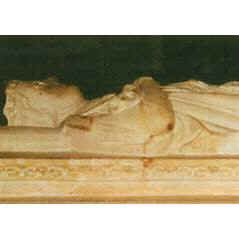
Sarcophagus
of Sancha S?nchez, Queen of Le?n, Countess of ?lava and
later of all Castile
|
GREAT GRANDPARENTS
|
Rognvald Eysteinsson (fl. 865) sometimes referred to with the bynames of "the Wise" or "the Powerful" |
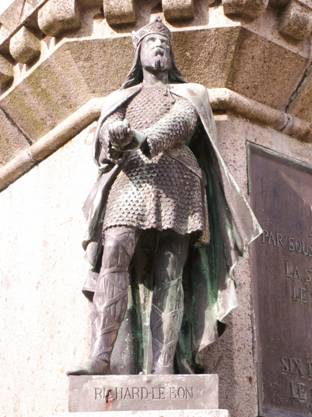
Rollo on the Six Dukes statue in Falaise town square 1st Ruler of Normandy |
Statue of William Longsword part of "Six Dukes of Normandy" series in Falaise 2nd Ruler of Normandy
|
|
Richard the Fearless as part of the Six Dukes of Normandy |
Richard IIvthe Good, "Six Dukes
of Normandy"
|
|
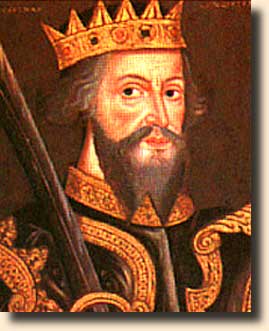
King Guillaume William I, The Conqueror, Viking, 6th Duke of Normandy, King of England |
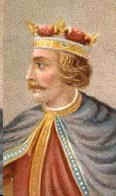
King Henry I of England] |

|
|
King Robert II (James Stewart) of Scotland |
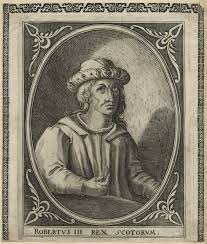
King Robert III (John Stewart) of Scotland |
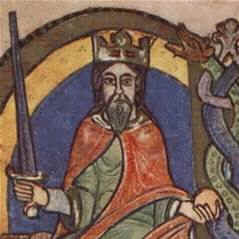
KING DAVID I of Scotland |
 Queen
Bethoc, Daughter of King Malcolm II of Scotland, mother of King Duncan I of
Scotland Queen
Bethoc, Daughter of King Malcolm II of Scotland, mother of King Duncan I of
Scotland |
Empress Matilda, mother of King Henry II |
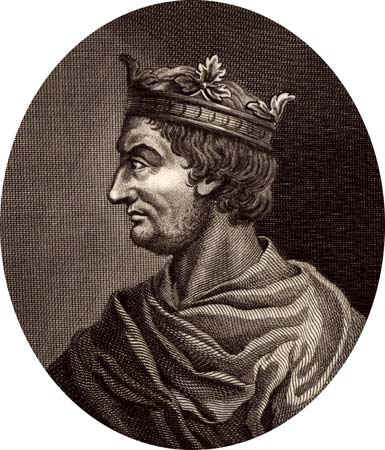
Robert II Capet King of France, father of Queen Matilda of France, |
|
12th centry portrayal of King Hugh Capet (941-241) |
King Robert I Capet of France |
KING Henry the Fowler of Germany, daughter Hedwig of Saxony married to Hugh the Great |
|
17th century commemorative fresco from Bernard's grave in Milan, Italy.
Bernard, King of Lombardy, Bernardo, |
"Pepin" Carloman, King of Italy, son of King Charlemange |
KING CHARLEMANGE King of Franks; King of Italy and the first Holy Roman Emperor., |
|
A statue of Pepin the Younger in Wurzburg
KING PEPIN III, (the short), King of the Franks . |
The statue of Charles Martel at the Palace of Versallies De Facto ruler of Francia from 718 until his death. Son of Pepin of Heristal |
|
|
Pepin of Heristal, Pepin II (right) being offered the services of Saint Hubert (left) De facto ruler of Francisa |
|
King Hugh Capet 941-966, 1st King of the Franks. He married Adelaide |
|
KING MALCOLM III Scotland |
|
KING DUNCAN I OF Scotland the historical basis of the "King Duncan" in Shakespeare's |
|
Victorian despiction of Malcolm III and his second wife,
Margaret. |
Fanciful 17th century depiction of the king Malcolm II of Scotland |
King Kenneth II of |
|
King Malcolm I of |
KING DONALD II OF |
|
| KING KENNETH MACALPIN OF THE PICTS |
QUEEN MARGARET OF WESSEX Image
of Saint Margaret in a window at St
Margaret's Chapel, Edinburgh
(Also known as Margaret of Wessex, wife of King Malcolm III)
|
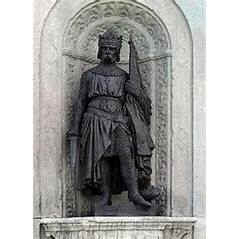
Fulk
(Foulques) V, |

|

|
Tomb effigy of King John of England, Worcester Cathedral |
|
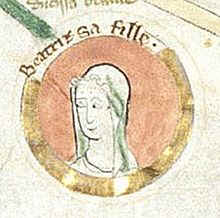
Princess Beatrix de Dreux of England |
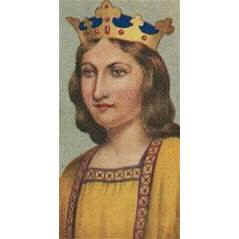 Queen
consort of England, as the spouse of King Henry III of England Queen
consort of England, as the spouse of King Henry III of England |
alfonso ii the chaste one was king of arag?n and count of barcelona |
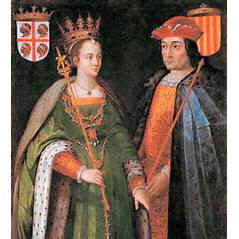
Portrait of queen Petronila of Aragon and count Ramon Berenguer IV of ... |
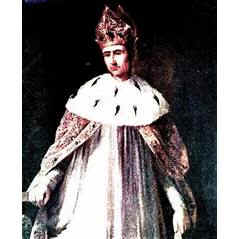
Ramiro II King of Aragon |
SANCHO RAMIREZ ( king of Aragon from 1063 to 1094 |
ramiro i of aragon c1007 1063 king of aragon 1035 |
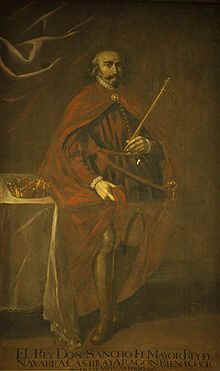
Sancho Garc?s III, as depicted by Juan Rizi in the 17th century |
Garc?a S?nchez II of Pamplona Representation of Sancho II in a book about the Portuguese monarchs |
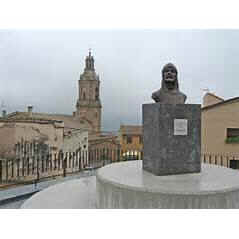
Garc?a I S?nchez, rey de Pamplona (931-970) |
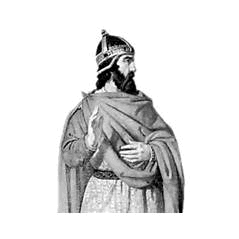
Sancho I Garc?s (c. 860 ? December 11, 925) was king of Pamplona |
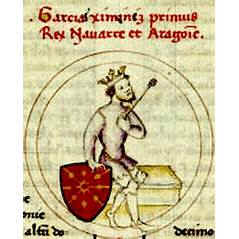
Garc?a Jim?nez of Pamplona |
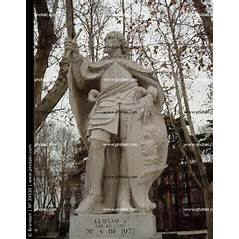
Fotos Estatua de Alfonso V de Le?n, Plaza de Oriente. Madrid |
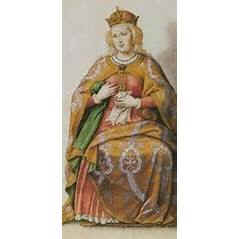
Sancha of Le?n (1013 ? 27 November 1067) was a Queen of Le?n |
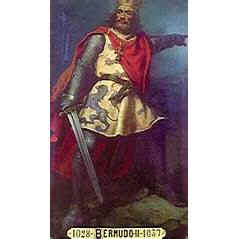 Bermundo III de Leon |
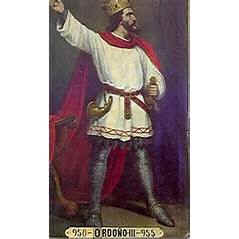
Ordo?o III |
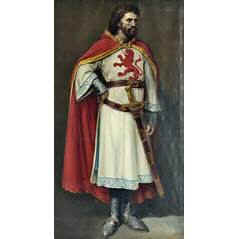
Ramiro II de Le?n |
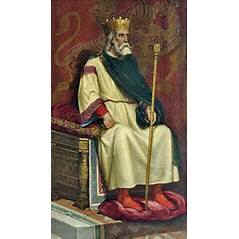
Ordo?o II de Le?n |
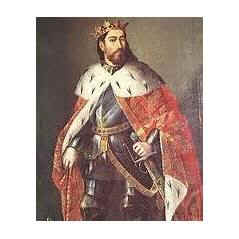
ALFONSO III |
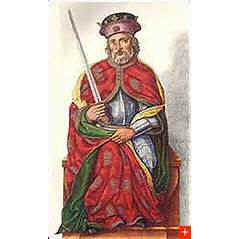
ordono-I |
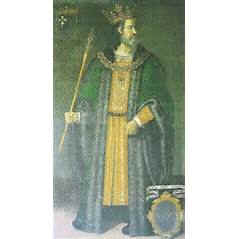
Ramiro I of Aragon |
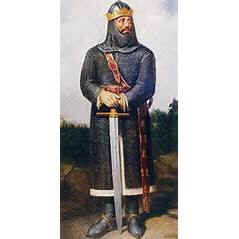
Opiniones de Alfonso VII |
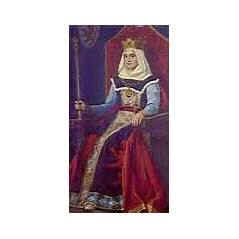
Empress Urraca I de Leon |
|







.JPG)


